From smartphones and household appliances to clothing and toys, a significant portion of the goods we use daily bear the familiar label: “Made in China.” For decades, consumers around the world have marveled at, and sometimes questioned, how products manufactured across the ocean can be sold at such incredibly low prices.
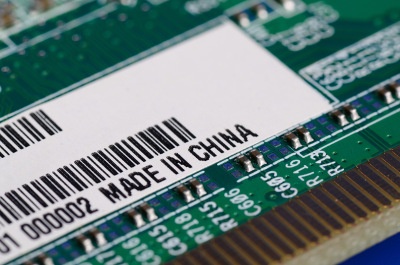
The affordability of Chinese goods is not a matter of random chance or a single economic trick. Instead, it is the result of a highly sophisticated, deeply integrated manufacturing ecosystem that China has spent decades building. Understanding the mechanics behind these low prices reveals a fascinating intersection of economics, logistics, and industrial strategy.
The Power of the “Supply Chain Ecosystem”
One of the greatest misconceptions is that Chinese goods are cheap solely because of low labor costs. While labor costs played a massive role in the 1990s and 2000s, China’s true modern competitive advantage lies in its unparalleled supply chain efficiency.
Industrial Clustering
In China, manufacturing is organized into specialized industrial clusters. For example, a single city might focus almost exclusively on manufacturing zippers, while another neighboring city specializes in buttons, and a third handles the textiles. Because all component suppliers, raw materials, and assembly factories are located within miles of each other, logistics costs are slashed to a minimum. Factories do not waste time or money shipping parts across continents; everything they need is right next door.
Massive Economies of Scale
Chinese factories operate on a scale that few other countries can match. By producing items in millions rather than thousands, manufacturers achieve massive economies of scale. The fixed costs of setting up assembly lines, machinery, and molds are distributed over a colossal number of units. As a result, the cost to produce each individual item drops to mere pennies.
Infrastructure, Logistics, and Government Support
An efficient factory is useless if you cannot move the goods to the market quickly and cheaply. The Chinese government has invested trillions of dollars into domestic infrastructure, creating a seamless pipeline from factory floors to international cargo ships.
World-Class Port and Transport Networks
China is home to some of the busiest and most technologically advanced container ports in the world, including Shanghai and Shenzhen. A dense network of high-speed railways, modern highways, and deep-water ports ensures that goods move across the country with minimal friction. This highly optimized logistical network reduces transit times and slashes shipping costs, allowing products to remain highly competitive even after traveling across the globe.
Strategic Government Subsidies
The Chinese economic model heavily supports its manufacturing sector. The government provides various forms of assistance to local factories, including subsidized land use, low-interest loans from state banks, and tax rebates for exporters. These financial cushions lower the operational risks for manufacturers, allowing them to maintain razor-thin profit margins while keeping retail prices incredibly low for foreign buyers.
Labor Dynamics and Advanced Automation
While wages in China have risen significantly over the last decade—making it less of a “cheap labor” haven than it used to be—the country has adapted to maintain its low-cost edge through human resource management and technology.
A Highly Skilled and Flexible Workforce
China offers an enormous, highly disciplined, and deeply experienced industrial workforce. Furthermore, the country produces millions of engineers and technical graduates every year. This means factories can scale up production rapidly, adapt to new product designs overnight, and maintain high efficiency without facing labor shortages.
Rapid Transition to Automation
To combat rising wages, Chinese manufacturers have heavily invested in robotics and factory automation. By replacing repetitive manual tasks with high-speed automated machinery, factories can operate twenty-four hours a day, reduce human error, and further drive down the long-term cost of production.
Conclusion
The remarkably low prices of goods from China are the product of a masterful combination of industrial clustering, massive economies of scale, world-class logistics infrastructure, and proactive economic policies. It is an entire ecosystem designed from the ground up to maximize efficiency and eliminate waste at every single step of production. While global supply chains continue to evolve, China’s deeply rooted manufacturing advantages ensure that it remains a dominant, highly affordable force in the global marketplace for years to come.
